Epoxy vs. Polyaspartic Garage Floors: What Is the Difference?
Compare durability, appearance, curing time, UV resistance, maintenance, and other important factors before selecting a garage floor coating.
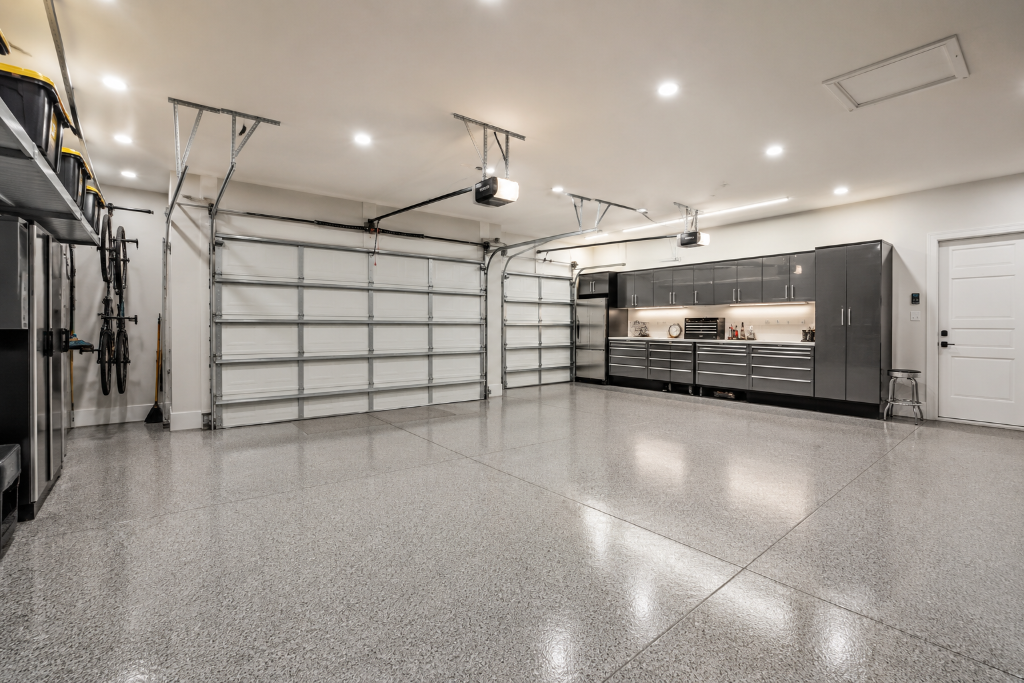
What Is the Difference Between Epoxy and Polyaspartic Garage Floors?
Epoxy and polyaspartic are both durable garage floor coating systems, but they differ in curing time, UV stability, installation process, appearance options, and cost. Epoxy is a time-tested, cost-effective option. Polyaspartic cures faster and offers superior UV stability.
Epoxy Garage Floor Coatings
Epoxy is a two-part system — resin and hardener — that chemically bonds to properly prepared concrete. It has been the standard in garage floor coatings for decades.
Advantages of Epoxy
- Durable and cost-effective
- Excellent adhesion when applied over properly ground concrete
- Available in a wide range of colors and flake blends
- Resistant to chemicals, oil, and hot-tire marks
- Can last 5 to 10 years with proper maintenance
Considerations With Epoxy
- Longer curing time — typically 24 to 72 hours before foot traffic and up to 7 days before parking
- Not inherently UV-stable — can yellow or amber when exposed to direct sunlight
- Sensitive to moisture during installation — requires proper moisture testing of the concrete slab
Polyaspartic Garage Floor Coatings
Polyaspartic is a newer generation of coating in the polyurea family. It offers similar durability to epoxy but with faster cure times and better UV stability.
Advantages of Polyaspartic
- Fast curing — foot traffic in as little as a few hours, vehicle parking within 24 hours
- UV-stable — resists yellowing and fading from sunlight
- Flexible — expands and contracts with temperature changes, reducing cracking
- Can be applied in a single day in many cases
- Typically lasts 10 to 15 years or more with proper care
Considerations With Polyaspartic
- Higher material cost than standard epoxy
- Fast cure time means less working time during installation — requires an experienced installer
- Surface preparation is equally critical — polyaspartic will not bond to poorly prepared concrete
How Do They Compare Side by Side?
| Factor | Epoxy | Polyaspartic | |---|---|---| | Cure time | 24-72 hours | A few hours | | UV stability | Can yellow | UV-stable | | Durability | Very good | Excellent | | Cost | More affordable | Higher | | Lifespan | 5-10 years | 10-15+ years | | Flexibility | Rigid | Flexible |
Which Coating Is Right for Your Garage?
The best choice depends on your priorities:
- If budget is the primary concern, a well-installed epoxy system provides excellent value and durability.
- If you need your garage back quickly, polyaspartic's fast cure time is a major advantage.
- If your garage receives direct sunlight, polyaspartic's UV stability prevents yellowing over time.
- If you want maximum longevity, polyaspartic generally outlasts standard epoxy.
What Matters Most: Surface Preparation
Regardless of which system you choose, surface preparation is the most important factor in how long your coating lasts. Proper concrete grinding, crack repair, and moisture testing ensure the coating bonds permanently to the slab. A premium coating applied over poorly prepared concrete will fail — no matter how good the material is.
The Bottom Line
Both epoxy and polyaspartic can transform a bare concrete garage floor into a durable, attractive surface. Epoxy offers proven performance at a lower cost. Polyaspartic delivers faster installation, UV stability, and longer life. A professional installer can evaluate your concrete slab and recommend the system that best fits your garage, your timeline, and your budget.
Planning a Garage Floor Project?
If you are ready to upgrade your garage floor, request a free estimate or learn more about our garage floor coating services.
Frequently Asked Questions
Ready to Start Your Project?
Get a free, no-obligation estimate from a Southwest Florida team with 25+ years of experience.